

As we prepare to raise the curtain on another exciting season, we are reminded that…
Revisiting Taming of the Shrew

In 2019, the bold headline—Was Shakespeare a Woman?—leapt out at former Eugene Ballet artistic director Toni Pimble. This chance encounter with an article in The Atlantic, written by journalist Elizabeth Winkler, set into motion the creation of Toni Pimble’s Taming of the Shrew. The resulting ballet is nothing less than amazing: a full-length two-act (42 scenes) ballet with three extended pas de deux, set in the 19th-century’s steampunk era; more than 60 steampunk-inspired costumes; three gigantic fantastical mobile steampunk machines; an enormous set of otherworldly machinations that magically morph and mutate before your very eyes; and a female composer’s score, rarely, if ever, heard before in the Pacific Northwest and played by Orchestra Next. The ballet premiered in May of 2022 and is set to return to the Hult Center this Halloween weekend, on October 30th and November 1st.
Pimble’s Three Muses: Emilia Bassano, Katherine, and Louise Farrenc
Shakespeare’s identity has been questioned for centuries; however, the idea that a woman had penned such literary masterpieces was patently dismissed. Winkler’s research focused on an acknowledged female writer of the time—Emilia Bassano. Winkler writes, “Born in London in 1569 to a family of Venetian immigrants—musicians and instrument-makers who were likely Jewish—she was one of the first women in England to publish a volume of poetry (suitably religious yet startlingly feminist, arguing for women’s ‘Libertie’ and against male oppression.” Pimble had her muse.
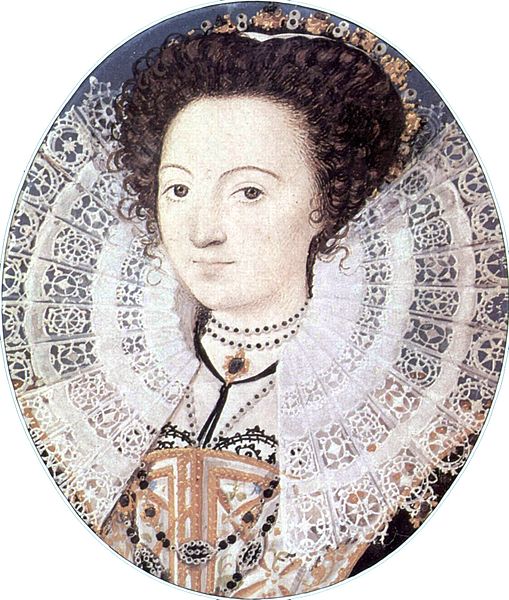
“I like Shakespeare, and Katherine is a very strong character,” Pimble said of her choice of Taming of the Shrew. In Pimble’s version, there is a most decidedly female voice playing to the strengths of Eugene Ballet’s female dancers.
At the ballet’s outset, Pimble tasks “Shakespeare” (Bassano) with introducing the play’s characters, as a female hand writes with pen and ink. The classic story arc, marrying for love and/or money, focuses on two weddings: older sister Katherine’s (the “shrew”) to the money-grubbing lothario Petruchio, and younger sister Bianca’s to her true love interest, Lucentio. In the two-act program, there is deception, manipulation, and an abundance of fantastical scenery as it all unfolds.
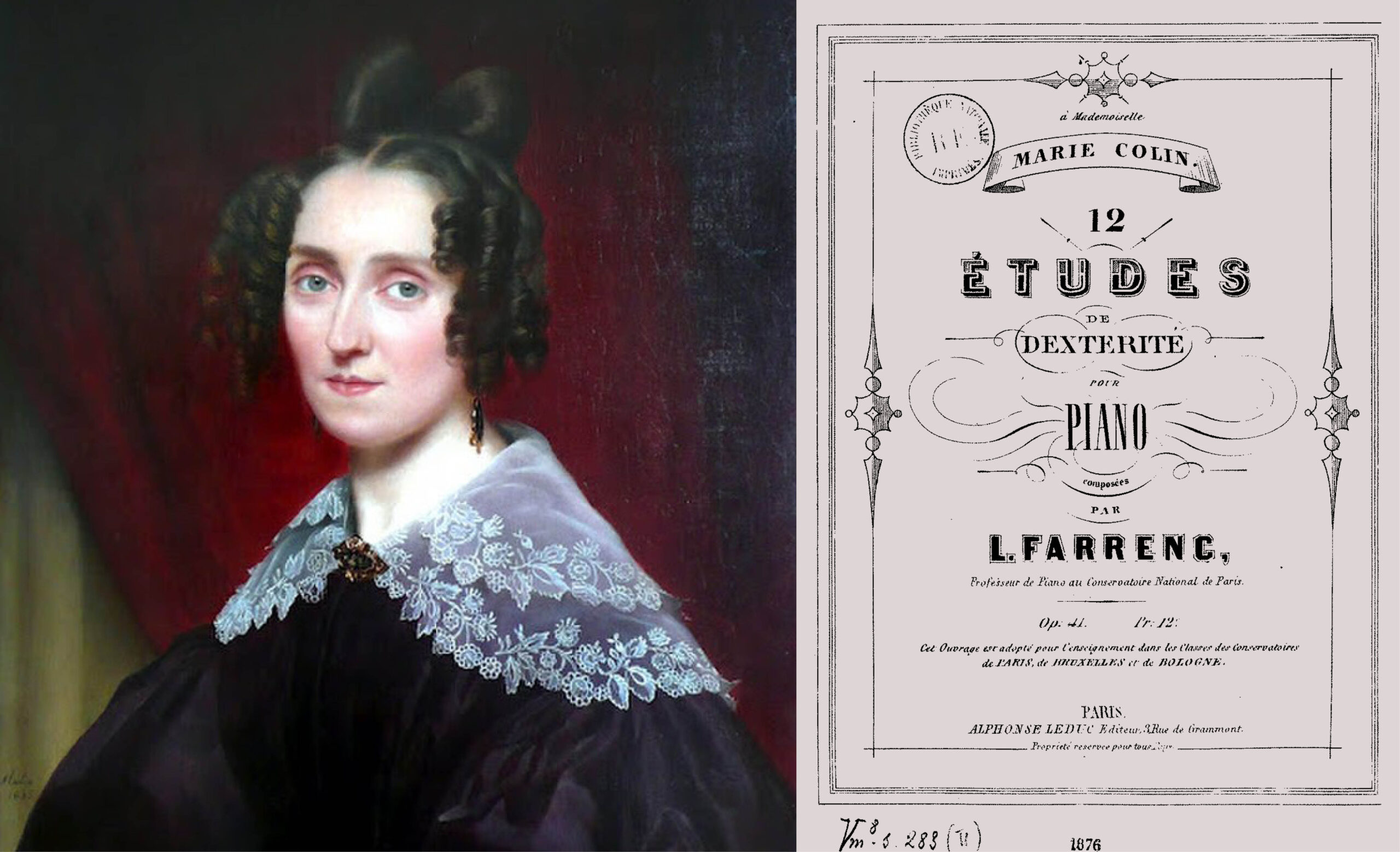
As classical music is most often her choreographic muse, Pimble chanced upon another 19th-century discovery: French composer Louise Farrenc. The ballet’s score, including Farrenc’s symphonies and nonets, will be performed live by Orchestra Next. Brian McWhorter, Orchestra Next Co-Founder and Conductor, who had never heard of Farrenc before the project began, explained what makes Farrenc’s music so important:
“First and foremost, Louise Farrenc is a brilliant composer—there’s just no other way to put it! Her scores are master classes in orchestration, melodic writing, and thematic development. But her music is also important right now for the story it tells about women in classical music. During her lifetime (1804–1875), she struggled as you might expect: she had a very difficult time getting her music published and performed, she was paid less than her male colleagues, and even after her death, her compositions remained unpublished and largely forgotten for more than 100 years. Fortunately, over the last several years, there has been a lot of interest in her work.”
With Bassano, Katherine, and Farrenc, Pimble’s muses go beyond the willful female cast in the misogynistic tale. As Winkler noted: “Like Alice’s rabbit hole, Bassano’s case opened up new and richly disorienting perspectives—on the plays, on the ways we think about genius and gender, and on a fascinating life.”
Bringing Taming of the Shrew into the World of Steampunk
With costumes, sets, and larger-than-life moveable machines, Pimble takes Taming of the Shrew out of its 16th-century origins and into the 19th-century world of steampunk, a retro-futuristic subgenre of science fiction.
The sheer amount of work involved in the ballet’s costume design and production—one of Pimble’s labors of love outside of choreography—alone is staggering. From sourcing fabrics as far away as New York City’s famous fabric mecca, Mood, to gathering endless quantities of tiny steampunk findings and accessories, every dancer will be exquisitely dressed. Katherine (Danielle Tolmie) will have five costume changes over the two acts. “The brocades we found at Mood, absolutely gorgeous, I might add, are from all over the world,” Pimble explained.
Architect and set designer Paul Dustrud (and Pimble’s husband) designed and created the renderings and mechanical drawings for this elaborately staged production. Dustrud also upcycled materials in his set design and collaborated extensively with Michael Briley and Eärendil Biskup, EB’s Technical Director and Assistant Technical Director, in fabricating the pieces. Biskup reflected that “the level of creative collaboration involved in building Taming of the Shrew has made it one of the most rewarding projects I have worked on.” Each cog, gear, rivet, and every carefully placed patina and rusted finish has been crafted with the care and conviction of these long-time EB crew members.
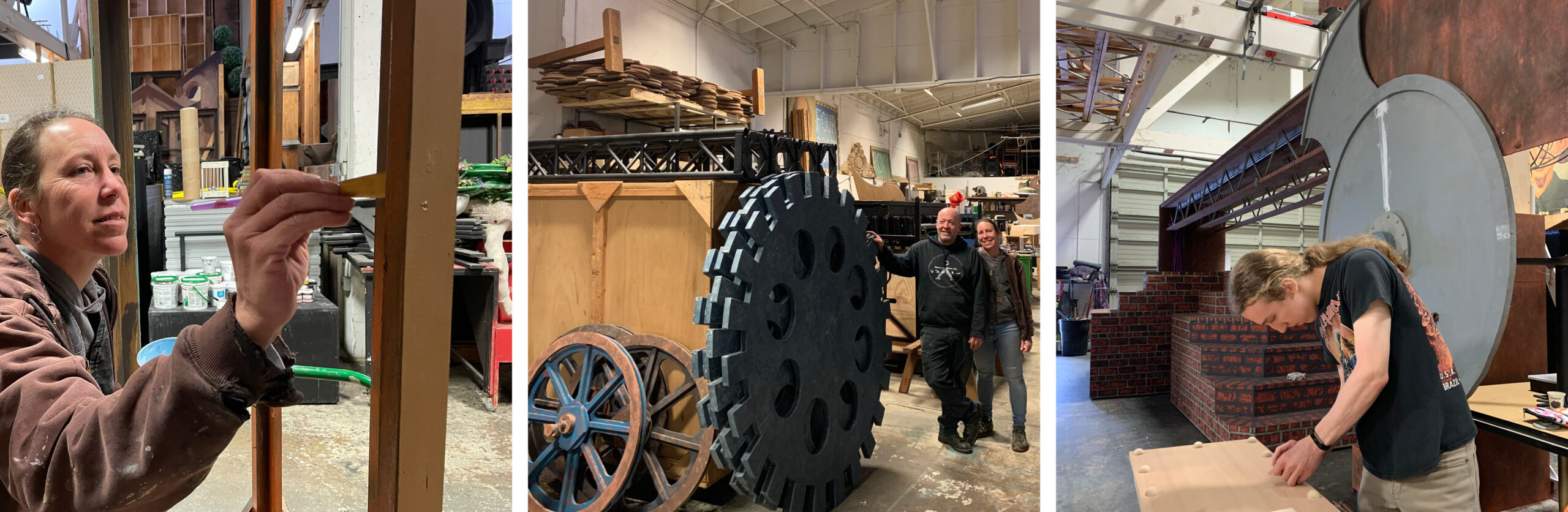
On set, we’re simply agog about the three steampunk machines created by Joe Mross and his team at Archive Designs, all playing important roles in the ballet. The largest of the three, Odenhamer’s Accordilodeon Mobilis, is a four-piloted mobile pipe organ carriage where Bianca (Koatsu Yashima) takes her music lessons. Petruchio’s (Mark Tucker) flying tricycle, Von Odenhamer’s Ornithopter Diomedea, is the second mobile piece by Mross. Upcycled and handcrafted with authentic wagon wheels by Hansen Wheel & Wagon Shop, the Ornithopter whirls across the stage with its licensed driver, Grumio (Dave Naquin), and passengers. The Mad Scientist Boiler Oven is the third piece to join the Shrew set.

Modern technology will play a small yet significant role in the ballet, even with a decidedly steampunk stamp. Quotes attributed to “Shakespeare” will appear above the stage as we’re asked to consider that the bard may have actually been a woman. And at the ballet’s closing, as the battle of the sexes rages on, more timeless quotes appear that may leave you pondering the possibility.
Don’t miss the highly anticipated return of Pimble’s Taming of the Shrew to the Hult Center Stage, October 30 and November 1st. Reserve your seat HERE.
Related


